

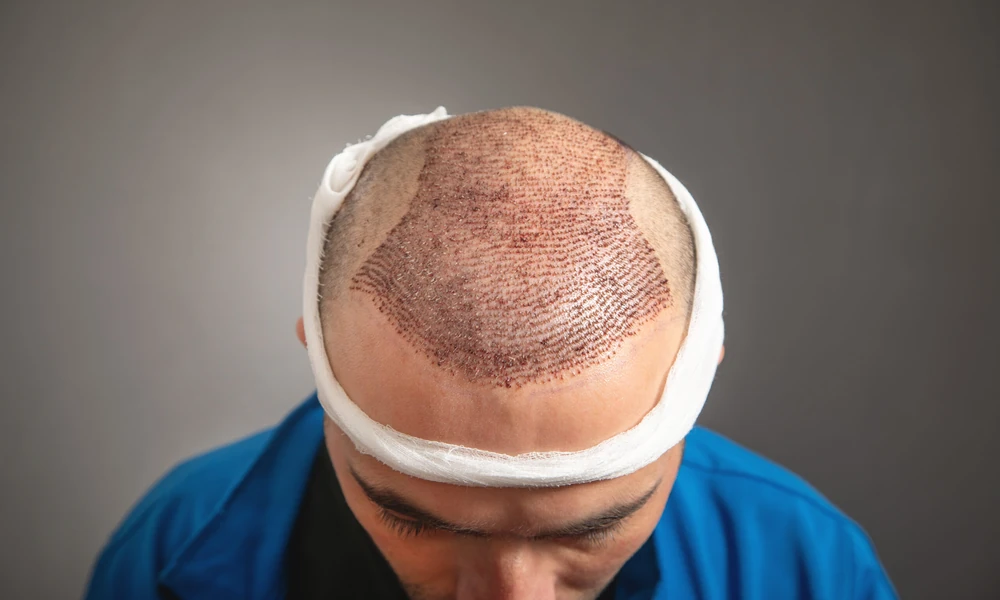
Turkey has become one of the world’s most recognized destinations for hair transplantation. Thousands of international patients travel to Istanbul every year for FUE, Sapphire FUE and DHI procedures. Competitive treatment costs and a mature medical-tourism sector have contributed to this growth. However, the number of clinics also makes comparison difficult. Searching for the best hair transplant doctor in Turkey can produce rankings, advertisements and promotional lists, but patients should look beyond visibility in search results and examine the physician, treatment model and long-term plan.
Start by Identifying the Doctor
A basic but important question is who is medically responsible for the procedure. A clinic may have an impressive website, a large social-media presence and attractive package offers, but patients should still know the full name of the physician responsible for assessment and surgical planning.
Before booking, ask who evaluates the donor area, who designs the hairline, who determines graft distribution, who creates recipient sites or channels, which stages are delegated to the medical team and how many patients are treated at the same time. Clear answers make it easier to understand what is actually being purchased.
Hairline Design Requires Long-Term Planning
A natural hairline is not simply a line drawn across the forehead. It should reflect facial proportions, age, existing hair characteristics and the likely progression of future hair loss. An excessively low or dense design may consume unnecessary donor grafts and become difficult to maintain if native hair continues to thin.
The frontal transition also needs irregularity and appropriate density. A rigid, perfectly straight line can look artificial. Good planning aims for a result that remains believable as the patient ages rather than maximizing short-term visual impact.
Recipient-Site Direction and Angle
Hair does not emerge vertically from the scalp. Different regions have characteristic directions and angles, especially around the frontal hairline and temples. Small errors repeated across hundreds of grafts can noticeably affect the final appearance.
For this reason, patients should ask who is responsible for recipient-site planning and creation. Graft survival is important, but survival alone does not guarantee a natural aesthetic result if the transplanted follicles grow in unsuitable directions.
Donor Hair Is a Limited Resource
The donor area should be treated as a limited biological resource. Once follicular units have been removed, the available supply is reduced. Excessive harvesting may create visible thinning and can limit options for future procedures.
A responsible plan therefore considers not only how many grafts can be transplanted today but how many should be preserved for later. This is particularly important for younger patients or those with progressive androgenetic hair loss.
FUE, Sapphire FUE and DHI
Technique names receive enormous attention in advertising. FUE refers to individual follicular-unit extraction. Sapphire FUE usually describes recipient-site creation with sapphire blades, while DHI commonly refers to implantation with specialized implanter devices.
All can be useful in appropriate cases, but none automatically guarantees a superior result. Donor management, graft handling, hairline planning, direction, angle and medical oversight remain essential regardless of the instrument used.
A Doctor-Led Example in Istanbul
One provider patients may encounter during their research is TurHair and Dr. Mehmet Sıraç Demir in Istanbul. TurHair presents its approach around physician-led assessment and treatment planning, including important aesthetic decisions related to the hairline and recipient area. The broader lesson is useful regardless of clinic choice: patients should verify what the named doctor actually does rather than assuming that a physician shown on a website performs every critical stage.
Evaluate Results Carefully
Before-and-after photographs can be helpful when lighting, camera angle, hair length and follow-up period are reasonably consistent. Patients should examine multiple cases rather than relying on one dramatic transformation.
Cases involving a similar hair-loss pattern, hair caliber and donor quality are usually more informative than unrelated examples. Photos should be treated as evidence to evaluate, not as a guarantee that every patient will obtain the same density.
Do Not Choose by Graft Number Alone
Large graft numbers are often used as a marketing tool. Yet more grafts do not automatically mean a better transplant. The appropriate number depends on recipient area, donor capacity, hair caliber, follicular density and long-term strategy.
The goal should be efficient use of available follicles. If a clinic focuses only on the largest possible number without discussing donor preservation, patients should ask additional questions before proceeding.
Price Is Only One Variable
Turkey’s competitive pricing is an important advantage for international patients, but two packages with the same technique name may represent very different treatment models. One may include substantial physician involvement and individualized planning, while another may be structured around high patient volume.
Patients should compare the medical plan, responsibilities and aftercare behind each quotation rather than assuming that the cheapest or most expensive option is automatically the best.
Final Thoughts
There is no single physician who can objectively be the perfect doctor for every hair-transplant patient. Anatomy, donor capacity, age, hair-loss pattern and expectations differ.
Instead of relying only on promotional rankings, patients should focus on verifiable criteria: physician identity, medical responsibility, donor management, natural hairline planning, documented results and a realistic long-term strategy. The most useful question is not simply who appears first online, but who will make the medical and aesthetic decisions that determine how the transplant will look for years to come.